
Municipality’s new tiered water rate facilitates change
The fast growing community of Sun Peaks has been attracting new residents, more guests and additional real estate development. But what impact has that had on the local water aquifer? Here’s the first in a series of four in-depth articles regarding the challenges of the water situation in Sun Peaks, made possible only by reader contributions.
Hotels focus on reducing guest water use as municipality invests in new infrastructure
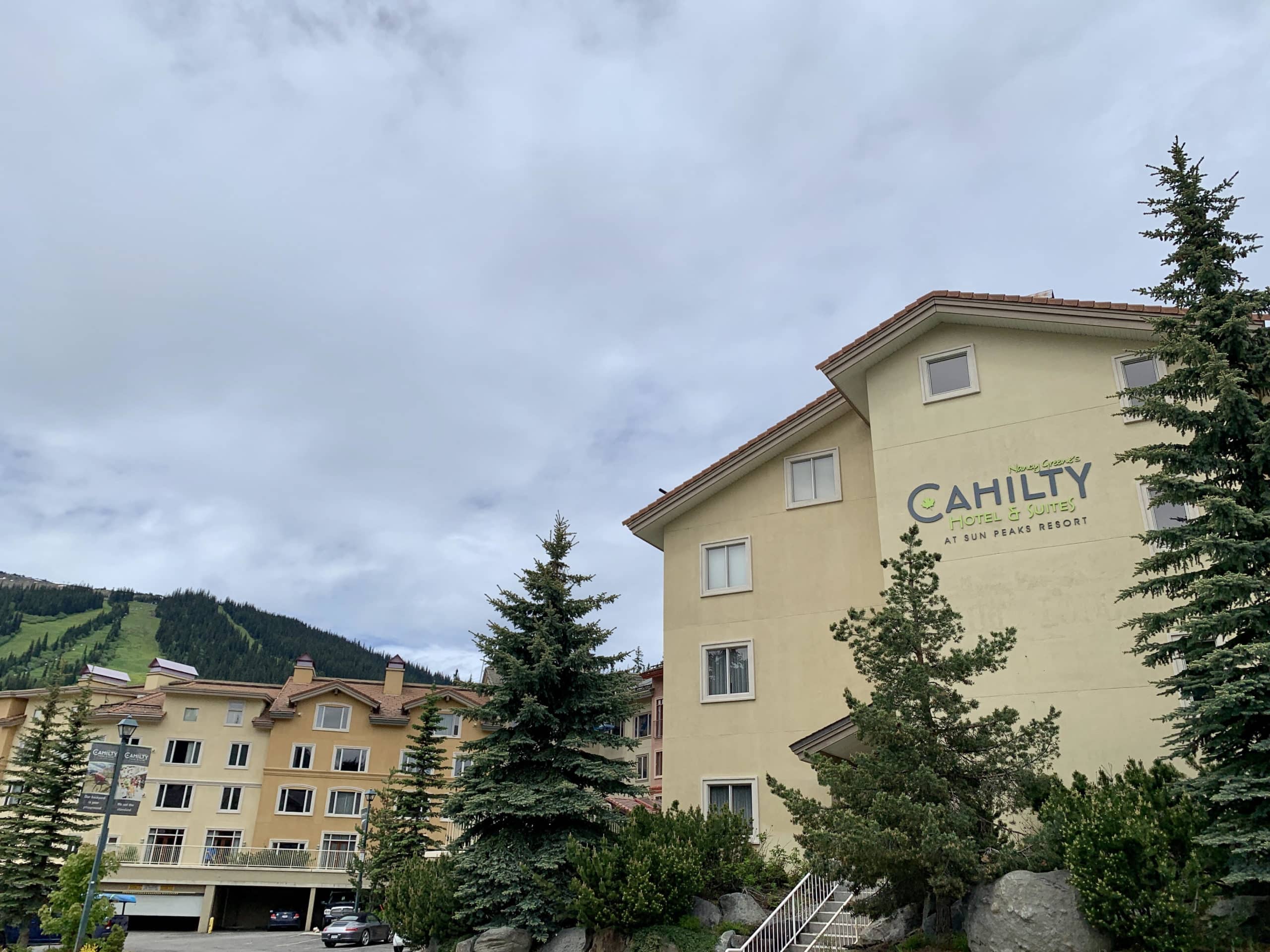
The Cahilty Hotel and Suites is one of a number of properties in Sun Peaks trying to conserve water. Photo SPIN
In February, unit owners at the Cahilty Hotel and Suites faced the kind of utility hike that can make you stop in your tracks.
Their water and sewer fee for the month increased by approximately 75 per cent over the same month last year.
According to Jack Parisotto, treasurer of the Cahilty’s strata board, the jaw-dropping hike was due to the tiered rate structure that the municipality instituted at the start of February. It effectively penalizes entities that use too much water.
“When we saw that this was happening, we said, ‘Hold it, how come we’re in the third tier [of water use]?’” said Parisotto. “And when we talked to the municipality, they said that one of the reasons is that the Cahilty was one of the highest consumers of water when compared to other condo hotels.”
Access to potable water is, of course, central to any community’s health, and in recent years, the limits to Sun Peaks Mountain Resort Municipality’s (SPMRM) access has come into sharp focus, prompting serious concern and significant financial investment.
SPMRM’s tiered water rate requires users to pay an additional charge of 30 per cent over the municipality’s base water rate ($2.42 per cubic metre) when a unit consumes above 3.5 cubic metres of water and below 4.5 cubic metres (per bed unit), and an additional 30 per cent when it exceeds 4.5 cubic metres (per bed unit).
Hotels have traditionally been the largest users of water in the municipality. And given the revolving door of guests, they’ve also been the most challenging to control.
In a release announcing its new tiered water rate system, SPMRM said that it had observed that hotels with high-efficiency toilets and shower heads use about 35 per cent of the water supply as hotels outfitted with older ones, and that high-usage properties sometimes use more than 400 per cent more water than the average residence on any given month.
One of the goals of the municipality’s structure change was to encourage entities to switch over their fixtures and appliances to newer, high-efficiency versions.
This has been the case at the Cahility. After receiving its bill in February, the strata board took a hard look at what was using the most water and decided to request that unit owners replace their 25-year-old toilets.
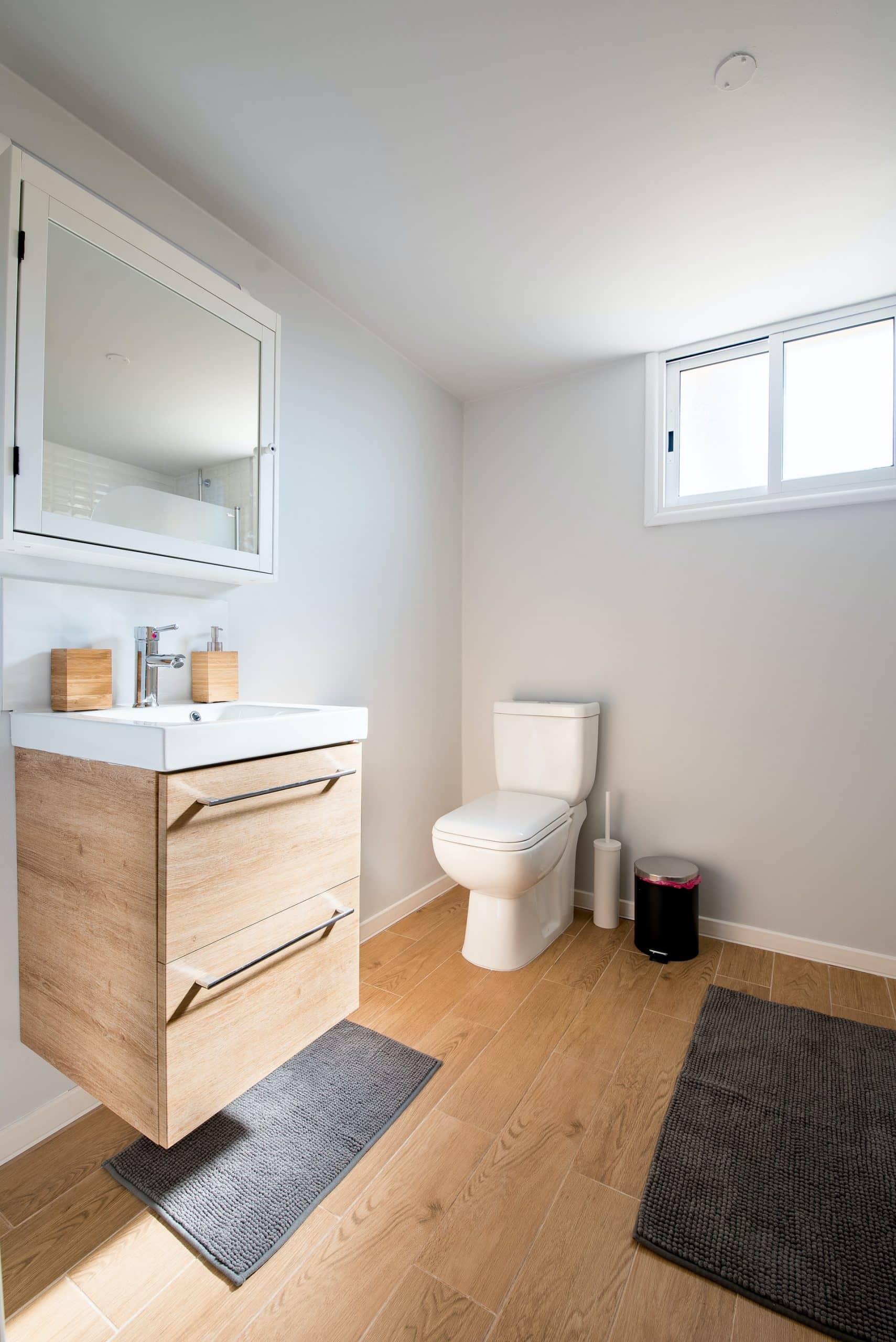
Low flow toilets are helping some hotels cut back the amount of water they use. Photo Filios Sazeides
Replacing the toilets (the hotel condo has roughly 160 in total) will result in significant savings for the strata owners, said Parisotto, who noted the old toilets use approximately 13 units of water per flush, compared to their low-flow counterparts, which use around three.
In addition to the Cahilty, the Coast Sundance Lodge and Sun Peaks Lodge (including the former Heffley Boutique Inn) have also recently changed their toilets to low-flow ones as a way to save on water.
Getting residents and visitors to conserve water is just one way that SPMRM is ensuring that the municipality has enough water to accommodate its continued growth.
The other relies on expensive infrastructure investments designed to add surface water to the community’s groundwater supply.
Since 2013, SPMRM has exceeded its estimated sustainable aquifer yield for its groundwater supply, which has been estimated at about 180,000 cubic metres per year.
In fact, the municipality’s water demand has increased every year since 2013, hitting its peak at around 265,000 cubic metres in 2018, before dipping down in 2019 due to a relatively short ski season.
As a way to supplement its potable water supply, in 2018 SPMRM installed a surface water treatment plant at the top of the platter after negotiating a deal with Sun Peaks Resort LLP (SPR) allowing it to repurpose a portion of the resort’s snowmaking reservoir. This source was used to bolster the community’s water supply by 4,500 cubic metres in 2018 and 54,000 cubic metres in 2019.
SPMRM mayor Al Raine said that even with the additional water this produces, there has still been serious cause for concern. He noted that last winter, the municipality used around three-quarters of the amount of reservoir water that had been allocated to it.
“As a long-term solution, we can’t end up where we start using the snowmaking water for the domestic water supply,” he said. “That’s taking away from Sun Peaks Resort’s ability to make more snow.”
As a way to address this, SPMRM is moving forward with major infrastructure of its own, which will see the construction of a new reservoir effectively doubling the community’s potable water supply.
One of the major challenges facing the resort community is its major fluctuations in visitation throughout the year, according to Peter Coxon, an engineer consultant with Urban Systems who has worked on SPMRM’s water utility for over 20 years.
Demand fluctuates from below 10,000 cubic metres per month in May, June, October and April, to above 20,000 in December, January and February.
“You have the residents that have a base demand, and then obviously you have a lot of visitors, so that’s where the real challenge comes in,” he said. “You’ve got to make sure you’ve got enough water to satisfy the hotels and the condos and all the users that might be there for months on end, but won’t be there in the spring or fall.”
Coxon added that he thinks the municipality’s efforts to educate the public on water conservation over the last several years have been successful, and overall residents are conservative with their water use.
The average amount of water used per person in Sun Peaks is approximately 216 litres per day, which is well below the Canadian average of 385 litres, noted SPMRM’s utilities website.
Anyone who thinks Sun Peaks has had to add surface water to current groundwater supplies because people have been wasting water are definitely wrong, said Coxon.
“I think there’s been a good job around education, awareness, and just getting that message out.”
At the Cahilty, things appear on track for the switch to low-flow toilets. In May, the strata approached owners about replacing their toilets with the ultra-flow toilets, and so far around 80 per cent of them have agreed to the change.
Parisotto said he is confident the others will follow suit when the board reaches out again. They aim to make the switch this summer.
“It should lead to a significant reduction in water consumption,” said Parisotto.
What did you think of this story?
Your feedback after we publish a story helps ensure we're always improving our reporting to better serve you.
Related Articles

How to prepare for an evacuation: the basics
When preparing for an emergency evacuation, pack a go bag, register for support services and stay informed.
Sun Peaks Mountain Resort Municipality seeks public input on Development Cost Charges Bylaw update
The proposed Development Cost Charges Bylaw update would increase development cost charges by nearly 18 per cent.

Crews respond to wildfire in Sun Peaks
An initial attack crew suppressed a wildfire 5 kilometres from the village.