
Walking together: Sun Peaks reflects on truth and reconciliation
Mayor Rob O’Toole and Adams Lake Indian Band Kukpi7 Lynn Kenoras Duck-Chief to meet in coming weeks following Truth and Reconciliation Day event in Chase.
Editor’s note: As a member of Discourse Community Publishing, SPIN uses quotation marks around the word “school” because the Truth and Reconciliation Commission found residential “schools” were “an education system in name only for much of its existence.”
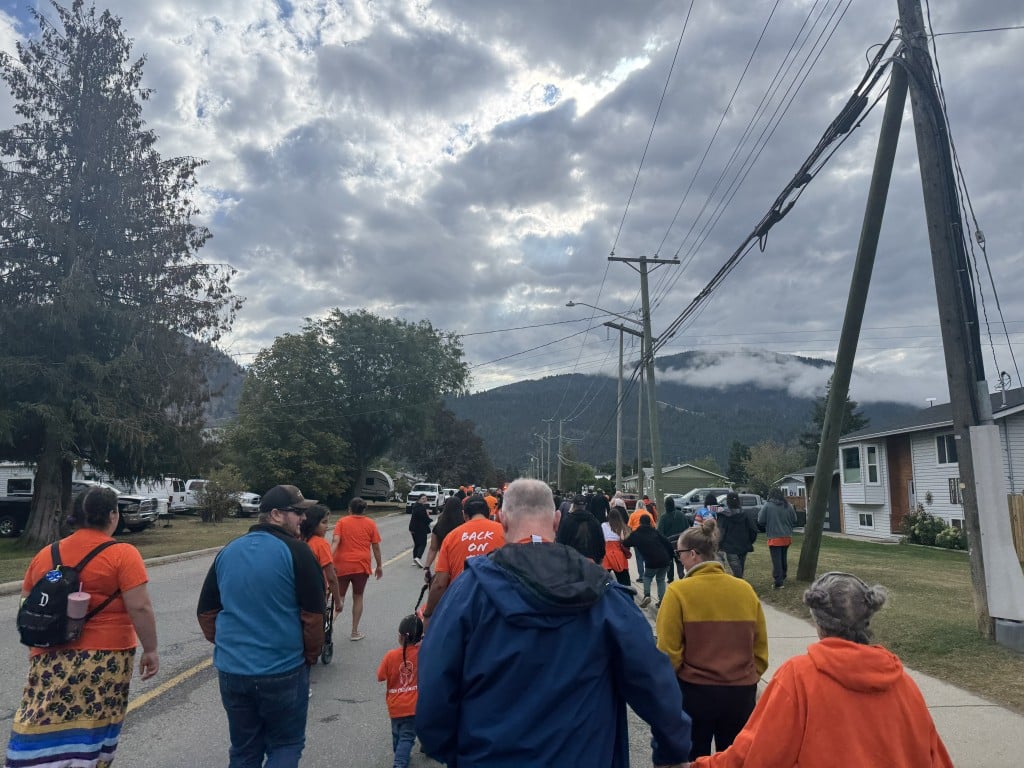
The path toward truth and reconciliation is neither short or easy, but at a recent community walk in Chase, leaders and community members took a step together. What unfolded was more than a commemoration; it was a moment of reflection, grief and hope for relationships still being built.
Carrying on a legacy
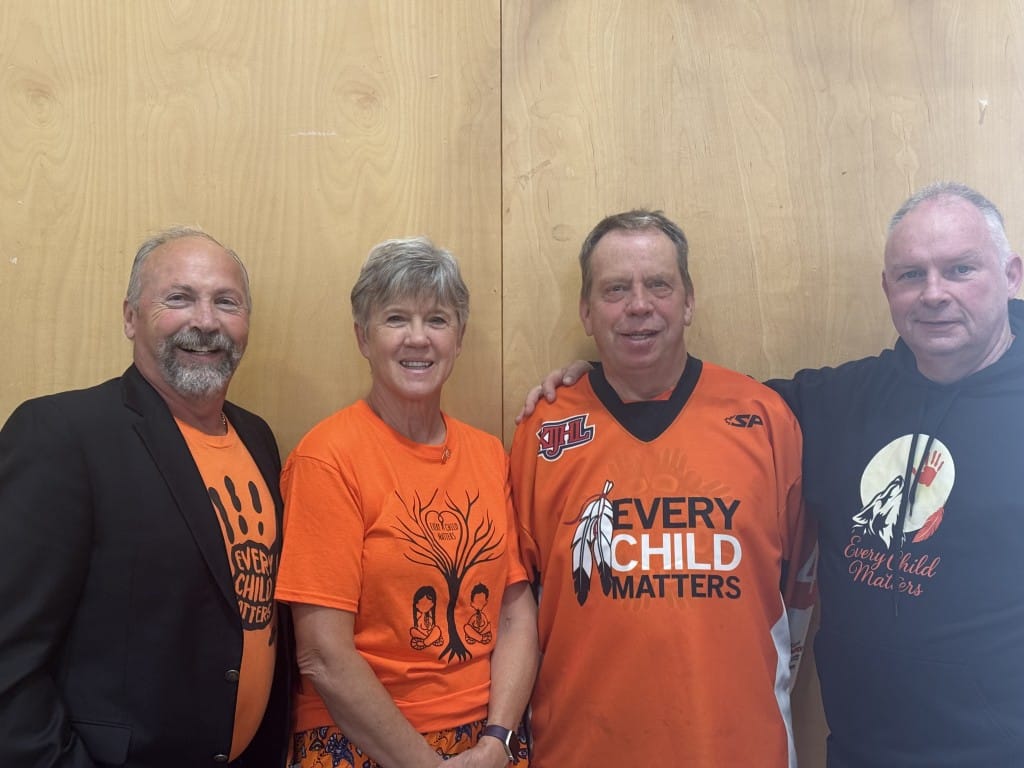
For Sun Peaks Mayor Rob O’Toole, the walk was both a personal and professional milestone.
“I was thinking a lot about Al Raine,” O’Toole said, referencing the former mayor who spent over 15 years working to build relationships with Indigenous communities. “For it to come to a commemoration like this was a big step. I’m excited to see that Kukpi7 [Lynn Kenoras] Duck-Chief has planted that seed with Mayor Lepsoe, that Chase will take more of a leadership role. I’m hoping we can extend a hand and be part of that as well.”
O’Toole acknowledged Sun Peaks’ relationship with the Adams Lake Indian Band and neighbouring Indigenous bands is still in its early stages, but he sees opportunities for meaningful partnerships on the horizon.
O’Toole and Kenoras Duck-Chief have agreed to get together in the coming weeks, he said.
“Probably in a more social setting, break some bread and look at opportunities for both economic partnerships and cultural sharing.”
“We’re also excited about the new Medicine Trail,” he added. “That’s something we’ll do in partnership with the three bands and they will really drive the agenda on what it looks and feels like.”
The mayor emphasized reconciliation is not a box to be checked but a long-term commitment.
“Getting a closer working relationship with Adams Lake is a priority for us,” he said. “That means listening first.”
A personal story of loss and strength
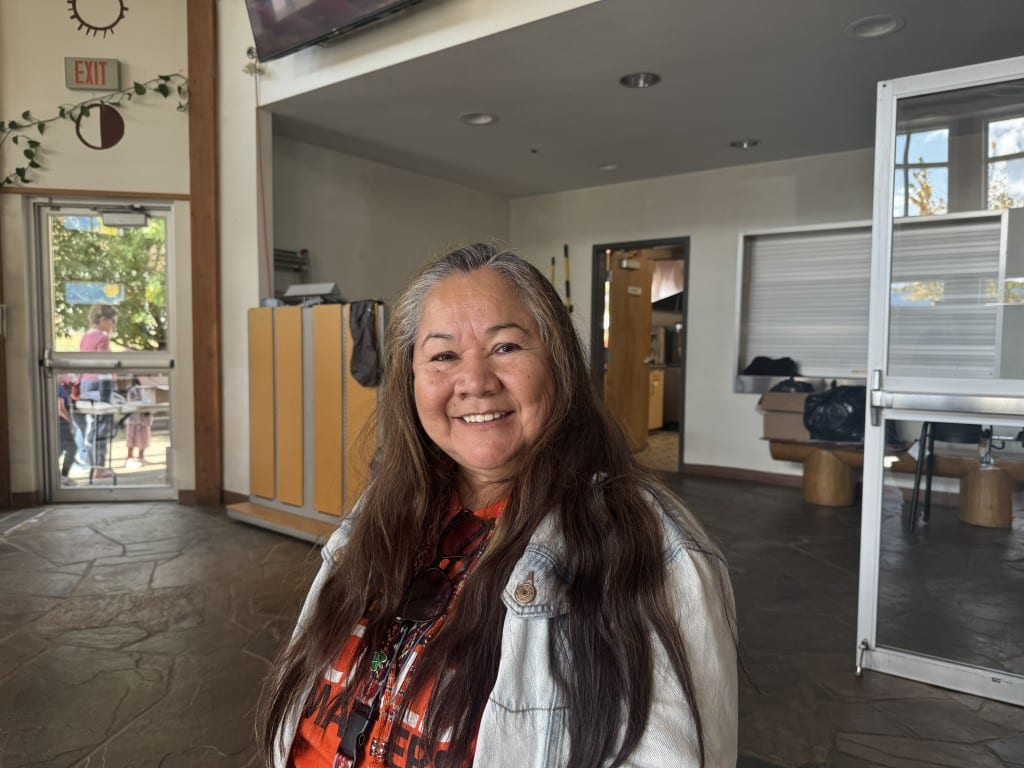
The walk also opened space for Indigenous voices, including Jo Ann Buffalo (Manuel) from the Neskonlith Indian Band, whose words captured both the pain of history and the resilience of her community.
“Truth and reconciliation means people are becoming aware of what our First Nations people have gone through just to be here today, walking on our lands,” she said.
Her story was deeply personal. She had worked as a home care nurse before returning to her community to care for her ageing parents. Her late husband attended a residential “school,” as well as his parents. Today, she is the last surviving member of her immediate family, having lost her husband and two sons in heartbreaking circumstances.
“My first son couldn’t live without his dad. He took his own life,” she shared quietly. “My second son turned to alcohol and drugs after losing his father and brother. He drank himself to death. Now my men are statistics in Canada. Too many of our people are gone.”
Rather than allow grief to silence her, she has chosen to speak. She sees truth-telling as central to reconciliation.
“It’s bad enough we have status numbers that keep track of us like property,” she said. “We are not numbers. We are our own people. We are learning again how to sing together, dance together and be strong together. That’s what reconciliation means to me.”
Healing through ceremony
For her, the path forward is rooted in ceremony, culture and the next generation. Each spring, she organizes a Tiny Tot Powwow in collaboration with School District 73, where local daycares bring children to dance and bless the land.
“Their spirits are still pure,” she said. “They come to give us a good start for the year. It reminds us that we all love our children, our grandchildren, our families and life must go on.”
Her words resonated with many in attendance: reconciliation is not only about acknowledging the past but also about nurturing the future.
“It’s good to have tears,” she said. “You cry because you have love in your heart. But then you wash with water, you pray to the mountains, to the trees, to the flowing rivers. That’s where healing comes from. Our ancestors are there. They carry us forward.”
She reminded the crowd that strength often comes from community.
“Sometimes all we can give future generations is love, purpose and good teachings. Gold or silver cannot compare with that. If you really listen, you can hear the Creator speaking in those words.”
The broader picture of reconciliation
Events like the Chase walk are part of a growing movement across Canada to address the harms of colonization and residential “schools.” The National Day for Truth and Reconciliation, observed each year on Sept. 30, was established to honour survivors, their families and the children who never came home.
For O’Toole, it is also a reminder of the responsibility municipalities carry.
“We have to find ways to walk alongside our Indigenous neighbours, not just in words, but in projects, partnerships and daily interactions,” he said.
The new Medicine Trail project, funded through provincial Resort Municipality Initiative grants, will be developed in close collaboration with the Secwépemc bands, ensuring that Indigenous voices lead the vision. O’Toole sees it as just one example of how cultural recognition and tourism development can move hand in hand.
Walking toward the future
Buffalo Manuel, reflecting on her journey of loss and resilience, emphasized that reconciliation is as much about healing the heart as it is about policy.
“Depression, addiction, violence — they are sicknesses of the mind and the heart. They take too many of our people,” she said. “Through culture, through love, through Creator, we can stand again. We must keep putting one foot in front of the other. Keep your chin up. If you need to rest, rest. But don’t give up.”
Her message underscored the urgency of not reducing reconciliation to numbers, statistics or political gestures. It is about people, families and communities.
As the walk ended, those present carried with them not only the weight of Canada’s history but also a renewed commitment to building stronger, more respectful relationships. For Sun Peaks, it marked another step in what leaders and Elders alike recognize as a long journey, but one that must be walked together.
“Reconciliation is not easy,” Buffalo Manuel said. “But if we listen with our hearts, if we honour our children and our ancestors, then we are walking in the right direction.”
What did you think of this story?
Your feedback after we publish a story helps ensure we're always improving our reporting to better serve you.
Author

Related Articles
A guide to helping wildfire evacuees
The most effective way to support wildfire evacuees is through financial donations to trusted organizations, the province says.
Off-road vehicles prohibited from Crown lands due to wildfire conditions
Provincial off-road vehicle clubs ask members to cancel plans and stay home as Crown land prohibition goes into effect.
Tourism Sun Peaks postpones the 2026 Heartland Country Festival, eyes fall for new dates
While the new dates have yet to be released, tickets for this year’s Heartland Country Festival in Sun Peaks will be transferred or refunded.