
What’s next for Sun Peaks Resort’s master plan?
Initiatives from expanding employee housing to increasing new snowmaking technology that will reduce the resort’s water use on the list for Sun Peaks Resort’s master plan.

Sun Peaks Resort LLP’s (SPR) Master Development Plan (MDP) update on Dec. 6, 2023, covered a lot of terrain, with a changed vision for the East Village, including five parcels of land for employee-restricted housing, along with increasing green space, updating lift infrastructure and much more.
Changes to development plans
The East Village will focus on higher-density accommodations on a smaller landbase because Light Detection and Ranging (LIDAR) mapping showed that terrain towards McGillivray Lake would be costly to develop and service due to its elevation, according to Darcy Alexander, chief executive officer for SPR.
A benefit of higher-density real estate is increased green space, which will expand Sun Peaks’ recreational footprint. According to Alexander, there will be 100 hectares of added recreational space.
The failed Olympic bid for Vancouver, which included Sun Peaks, means short-term priorities for SPR will take longer.
The Olympics didn’t change the overall plan for the resort, but they would have supplied infrastructure by necessity, allowed for core construction of sewers and roads and provided access to grant funding for the projects, Alexander said. Development in the East Village would have been accelerated, as well as capabilities for snowmaking and infrastructure on Mt. Morrisey.
A third skier base is no longer in the plans because of LIDAR mapping, but a second base will be developed in the east if a backroad from Chase is developed.
The backroad to Chase that has been in the MDP since its origin has no timeline.
The road would be instrumental for emergency evacuations from forest fires which impact our region yearly, and would provide travel links to the Chase, the Shuswap and First Nations bands.
“The priorities of roads in the province are hard to come by for building from scratch because they’re expensive,” Alexander said. “So it’s really a funding question and a bit of a political question as to when that goes in.”
Residents can also expect the resort to expand Sunburst Bar + Eatery in the coming years, as the West Bowl expansion will attract more visitors.
Which lifts take priority?
Alexander didn’t commit to which lift will come after the West Bowl Express, which is slated to start spinning for the 2024-2025 ski season, but he pointed to the Sunburst, Sundance, Orient and West Morrisey chairlifts and the Transvalley Connector chairlift.
Sunburst Express is 30 years old and will either be upgraded or replaced in the next five to seven years, as it’s a high-volume and well-visited part of operations.
Sundance Express is eventually getting six seats, up from its current occupant level of four riders per chair, and Orient will also.
The long awaited West Morrisey chair is also still in the plan, but Alexander said when it’s chosen comes down to pragmatic planning, and if the aging Sunburst lift needs upgrades, that will take priority.
“West Morrisey’s got beautiful terrain for the locals and the expert skiers, and I appreciate that very much. The good news is you can still ski it today, but you can’t return-cycle ski like you would with a lift there. It’s just going to be the pragmatics of what needs to be done first for the operation overall.”
Another change is redesigning the Transvalley Connector.
“The new version is just really a transportation lift to go from one side of the valley to another, from the Mt. Morrissey side to the Orient side,” Alexander said. “All these higher-density parcels out east will now have ski access to this Trans-Valley connector.”
Snowmaking and climate change
The resort has also refined where snowmaking operations go. Snowmaking will increase as the resort grows to the east, specifically on Sundance, the lower Orient and Mt. Morrisey, which is necessary for lower elevation segments.
To meet snowmaking needs, the resort must find a water source despite the scarce supply. The solution is to create a reservoir on land identified with LIDAR on Mt. Morrisey and use recycled wastewater to fill it, Alexander explained.
“One of the concepts for that reservoir is to use recycled water after it’s been treated through the municipality’s treatment plant by pumping it up there and storing it for use later as either snowmaking or irrigation.”
The concept isn’t new; Predator Ridge Golf Course uses the City of Vernon’s treated reclaimed water to irrigate its golf course. Mt. Buller in Australia does the same, reducing their reliance on sourcing water from creeks. British Columbia’s Ministry of Environment and Climate Change Strategy approves the use of treated wastewater, and SPR would be subject to government approval processes.
The tension between water needs and scarcity driven by climate change was felt throughout British Columbia this year, with the province seeing only 66 per cent of normal snowpack by March. The snow basin in January for the North Thompson was just 60 per cent of its normal level because of persistent drought in the fall and increased to 76 per cent by March.
When asked about climate change’s effects, Alexander was unsure what other winters will look like for Sun Peaks.
“I think we are far enough north and with enough elevation that climate change may affect us. You know, it’s too early for me to tell,” Alexander said. “This winter, for example, is a proxy for what winters might look like in the future, and we’ve managed to provide a very good product and be open our entire season.”
Employee housing
Sun Peaks Resort’s master plan identifies nine parcels for employee-restricted housing, five of which are allocated in the East Village and four in the West.
Originally, the development plan assumed units in houses would be rented to staff, but more homes are being used for personal use or for vacation rentals, leading to a staff housing shortage.
“It hasn’t worked out that [the market] supplied enough employee housing, as evidenced by the fact that our company now has nearly 400 employee beds with a new building that we’re constructing, and we’re going to need probably 2,000 to 3,000 beds in the whole community going forward,” Alexander explained.
However, infrastructure to support the projects is another matter. An underlying problem is the cost of infrastructure needed to support the projects, including roads, sewers, power and water connections. The timeline depends on tackling that infrastructure, which is also necessary for market real estate.
Alexander hopes the provincial and federal governments will offer Sun Peaks Mountain Resort Municipality (SPMRM) assistance for infrastructure.
No to more golf, yes to more trails
The planned second golf course in the resort’s master plan was nixed because LIDAR mapping showed the project wouldn’t be economically feasible. High elevation and uneven land, combined with the short golf season, means a second course will be replaced with more trails.
“We found this [land] better suited for recreational uses, like cross-country ski trails and mountain bike trails, which you can do in a wider variety of weather.”
The current golf course is “a recreational amenity. It’s definitely not a revenue generator,” Alexander said, but the resort sees growth in mountain biking and cross-country skiing.
Around 50 kilometres of trails are earmarked, but there is no direct timeline for the expansion. The earliest estimate is phase three in the next three to five years.
Next steps
Currently, SPR is in the final stages of phase two development. Phase three would start in the next three to five years, but it depends on the real estate market absorbing existing products and on timelines for infrastructure.
The first two phases of the MDP had dates in mind for completion, and but the last two phases did not, according to Alexander.
As an example, he pointed to Whistler Blackcomb’s timeline from start to finish. Whistler first started development in the 1960s, and it took fifty years for a full buildout. While much depends on the market, Alexander estimates a similar time frame for SPR.
Every five to seven years, SPR updates the MDP to keep information and technology current, and Alexander said planning processes are important for achieving the resort’s future vision.
“An old saying from Alice in Wonderland is, ‘if you don’t know where you’re going, any road will take you there,’” he said with a laugh. “The master plan is the roadmap for where you’re going. And then you figure out the details of how to fulfill a master plan on your journey as you go. It’s really the blueprint for creating the future.”
Editor’s Note, March 14, 2024, 11:00 a.m.: This article was updated to reflect the proper geographical reference to the Shuswap.
What did you think of this story?
Your feedback after we publish a story helps ensure we're always improving our reporting to better serve you.
Author

Related Articles
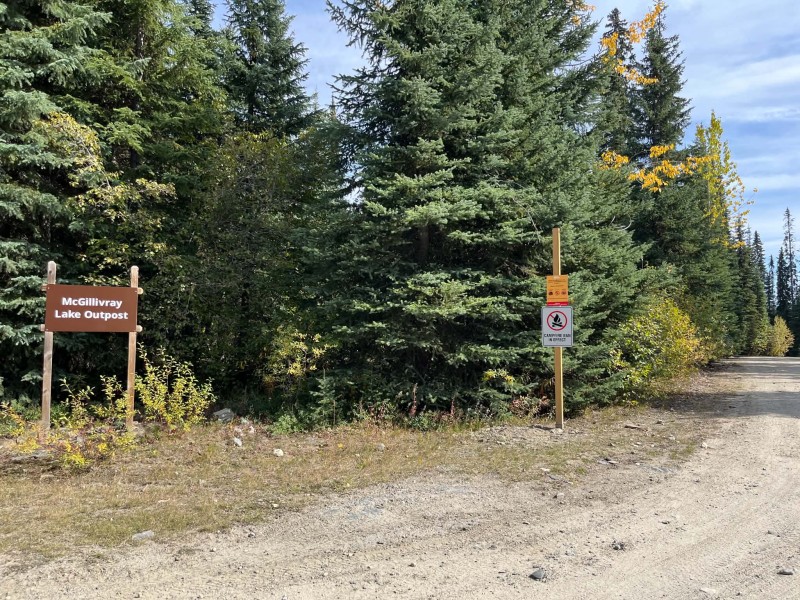
New sign clarifies camping rules at McGillivray Lake Outpost site
Overnight camping has never been permitted at the site, but the rule had not previously been promoted or enforced.
Indigenous Film Festival returns ahead of National Day for Truth and Reconciliation
Indigenous storytelling shapes fifth annual film festival over three days in Kamloops this weekend.
Sun Peaks adopts new emergency management bylaw
New bylaw formalizes Sun Peaks’ emergency management structure as the municipality works on an updated plan and hazard risk assessment.