
How to prepare for an evacuation: the basics
When preparing for an emergency evacuation, pack a go bag, register for support services and stay informed.
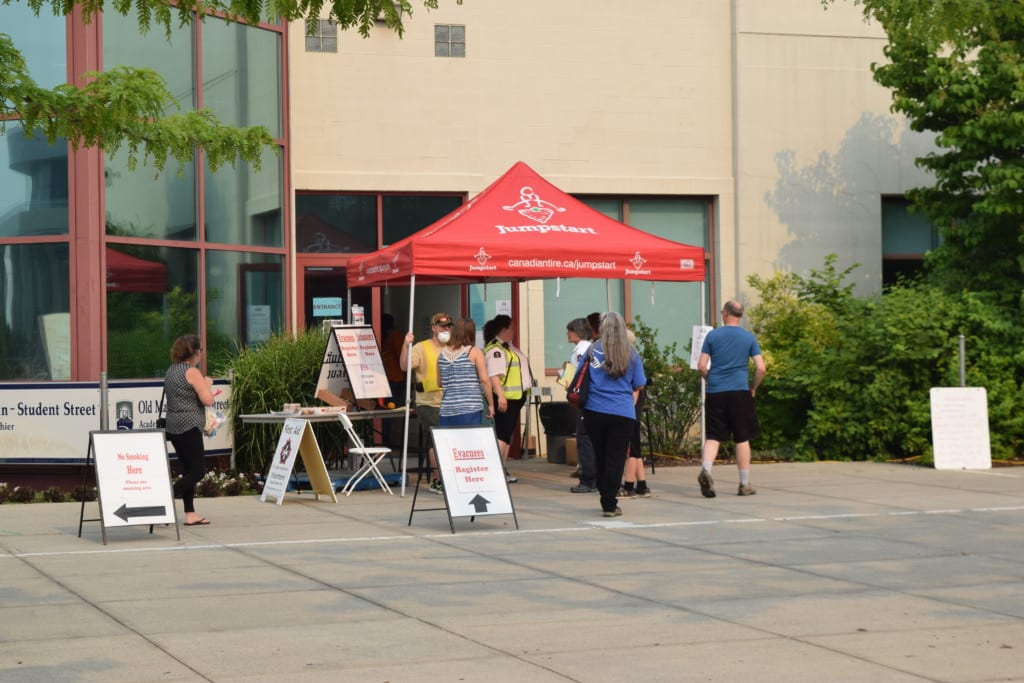
A number of evacuation alerts and orders have been issued throughout the province, with many within the Thompson-Nicola Regional District due to wildfires, and residents are being reminded to take precautions.
Sun Peaks Mountain Resort Municipality encourages residents to sign up for Voyant Alert!, a free multi-purpose communication tool that allows for quick notifications sent right to your cell phone, email or landline.
Folks are also encouraged to monitor official channels for notices related to wildfires nearby and to follow any advice given.
Evacuees can register for Emergency Support Services to access short-term services on a case-by-case basis, including temporary lodging, food, clothing and toiletries. If needed, specialized services like support with pets and transportation are also available. Residents have been urged to preemptively sign up for Emergency Support Services in order to speed up assistance, regardless of how close they are to an active wildfire.
“For example, individuals and families under an evacuation order may be able to receive $200 per night via e-Transfer without having to visit a reception centre in person, providing them with the flexibility to immediately evacuate to a hotel, campground or stay with friends or family in another community,” according to a provincial press release asking residents to register early.
To register for Emergency Support Services, have your phone and BC Services card handy. If using the BC Services App, the website will direct you to download or open the app, upload the number on your BC service card and submit your email. You’ll also be asked to verify your identity through photo and video.
Here are a few key resources:
- To register with Emergency Support Services, visit ESS.gov.bc.ca
- For information on evacuation alerts and orders, visit EmergencyInfoBC.ca or follow @EmergencyInfoBC on X, formerly Twitter, or Facebook.
- To learn more about how to prepare for emergencies, visit PreparedBC.ca
- To learn about how to prepare for wildfires, visit firesmartbc.ca
- Real-time wildfire information can be found on the BC Wildfire Service mobile app, which is available for Apple and Android users.
To report a wildfire, call 1-800-663-5555 toll free or *5555 on a cellphone or use the BC Wildfire Service app.
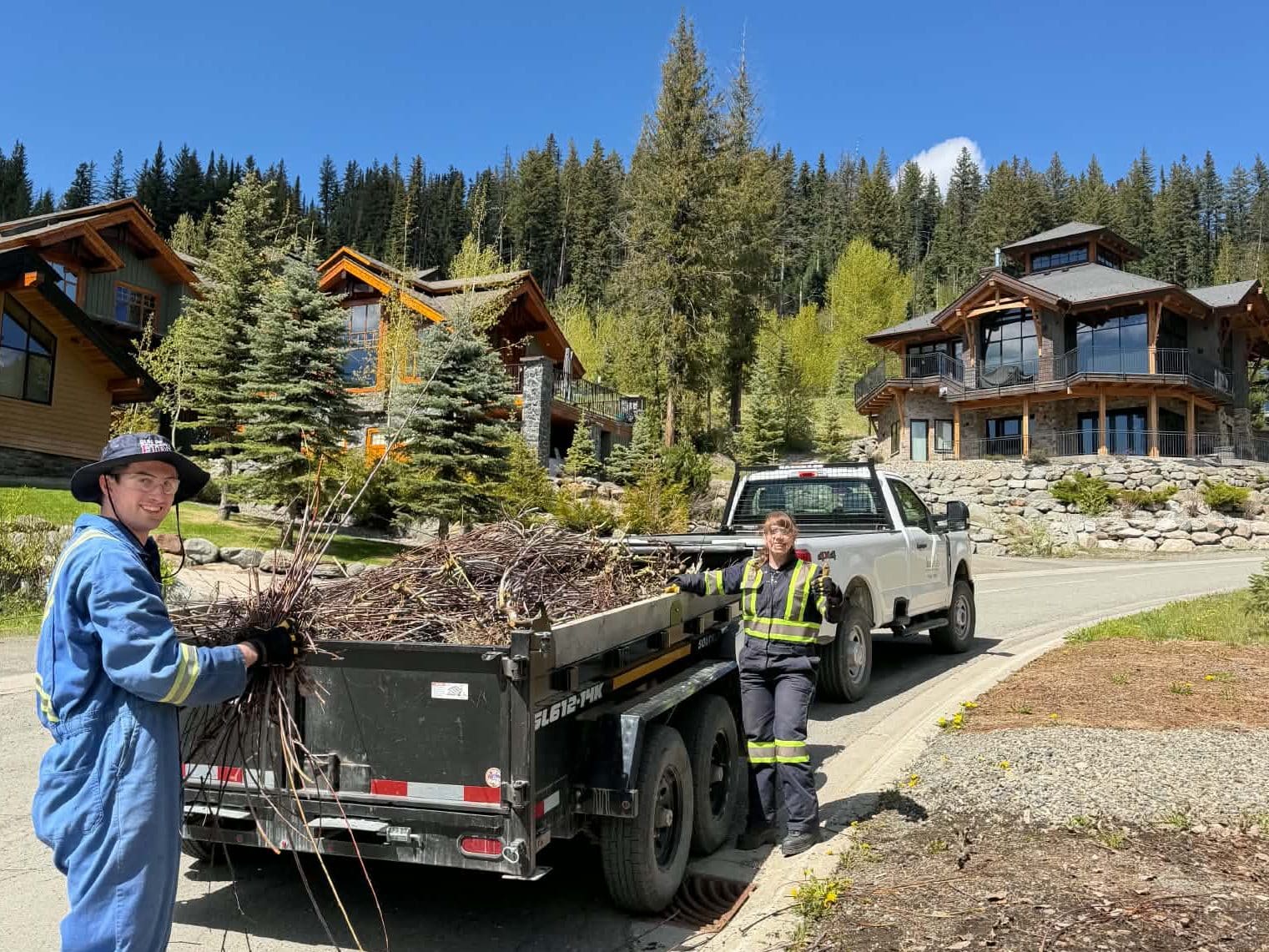
Evacuation alerts vs. evacuation orders
Evacuation alerts are issued to help residents prepare for the possibility of an evacuation order. If an alert has been issued and your property is within the affected area, locate all family members and pets and designate a spot to meet outside of the evacuation area in case an order is issued.
If an evacuation order is issued, you must leave your property immediately and can only return once the order is rescinded. Adults of sound mind who can make decisions about their wellbeing can legally refuse to leave their home and property, according to Sun Peaks Master Evacuation Plan.
“Those who decide not to evacuate are permitted to remain only on their own property,” the plan clarifies. “Police of jurisdiction have legal authority to arrest and remove individuals found off their own property.”
During a full-scale evacuation, Sun Peaks residents would be directed towards reception in the City of Kamloops, according to the Sun Peaks Community Wildfire Resiliency Plan.
“For lower numbers of people, or if only a portion of the resort area was being evacuated, the evacuees would either be directed to hotels at Sun Peaks or to a reception centre located either at Sun Peaks, the Heffley Creek Community Hall or Kamloops,” the plan further states.
Evacuations from Sun Peaks include routes north to Barrier, and south to Kamloops and Chase. Below is a screenshot of these routes, taken from the Sun Peaks Master Evacuation Plan.
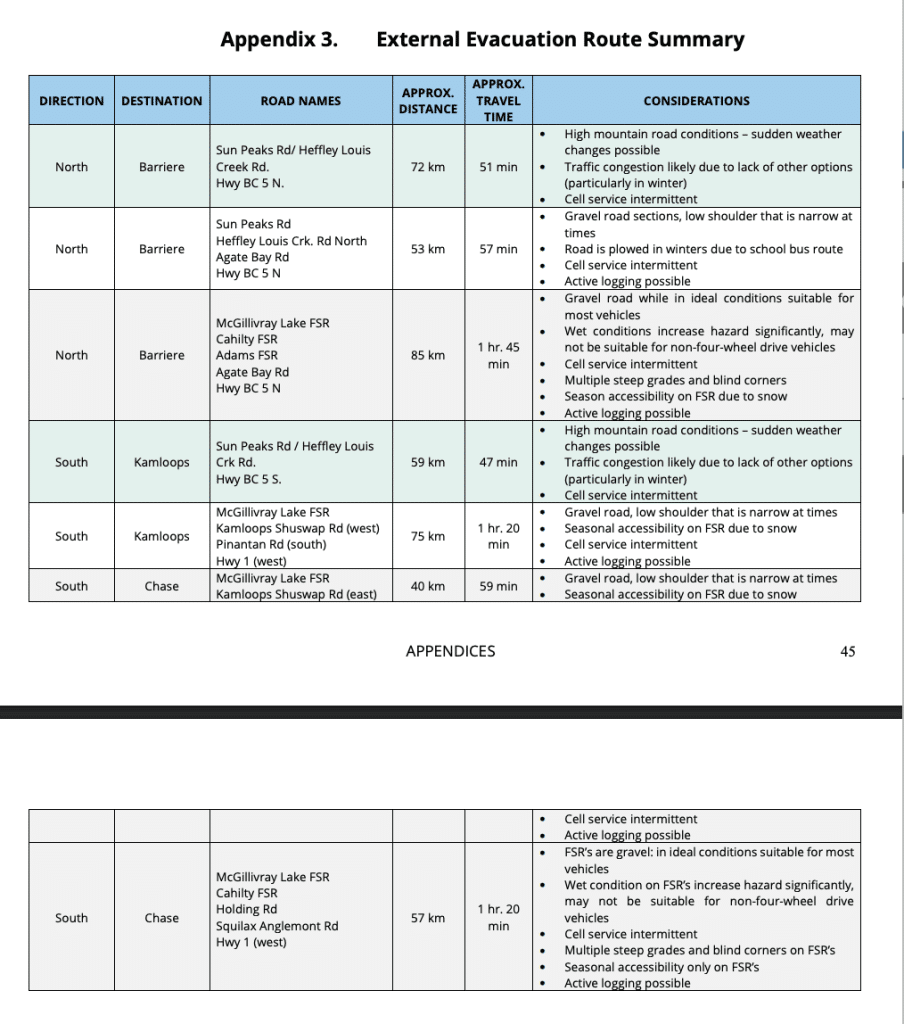
“The routes are not set in stone, and which one people will be directed to take will be determined by the Emergency Operations Centre,” Sun Peaks Fire and Rescue chief Dean Schiavon wrote to SPIN in an email.
Preparing to evacuate due to wildfire
To lessen the stress associated with natural disasters, the Canadian Mental Health Association recommends preparation, particularly if you are a member of a more vulnerable group, such as people with pre-existing chronic conditions like asthma, chronic obstructive pulmonary disease (COPD), heart disease or diabetes. People who are pregnant, infants and small children, the elderly and people who have been diagnosed with a respiratory infection such as COVID-19 are also at a higher risk during wildfires, according to the BC Centre for Disease Control.
This fill-in-the-blank emergency plan can be helpful when brainstorming how to prepare, but always consider your family’s specific needs. This site also has helpful guides for specific home types.
Here are a few things to consider when preparing for an emergency:
Fuel up: Best practice is to have at least half a tank at all times if you live in an area prone to wildfires. If you do not, fill your vehicle’s tank as soon as the evacuation alert is issued.
Pack your pills: Make a list of what medications you’ll need. If you care for an older person, remember their pills, as well as things like dentures. If you have kids, remember formula, comfort items, wipes and diapers. Additionally, masks can help keep out the smoke, particularly if you’re a member of a vulnerable group, BC Centre for Disease Control recommends an N95 mask or similar.
Prepare your pets and livestock: Bring anything that’s needed for your pets, like a leash, a carrying cage, food, medications, comfort items and first aid kit — not to mention the pets themselves!
Livestock owners have primary responsibility for evacuating their livestock. Livestock owners can do the following to prepare.
– Review available farm insurance programs for financial assistance
– Contact the BC Cattlemen’s Association, BC Horse Council or other associations/organizations that support domestic livestock activities
– Find a host location or a location for the animals for the duration of an evacuation period
– Identify where beef cattle / non-lactating cattle will move
– Arrange immediate transport measures
Pack your phone chargers: Phones are a must-have for important updates on the evacuation so pack chargers — a dead battery makes them useless.
Pack the basics: Think of the basic essential survival supplies you’ll need on the road for a few days. Include water and food for pets, people and cars.
Grab important papers: Get your insurance information for everything, including boats and RVs. Also, don’t forget key documents that are a pain to replace: marriage certificates, citizenship records, passports, birth certificates, wills, deeds, etc. For items that are saved digitally, have a hard drive ready.
Remember priceless items: Make an emergency list of things that will be easy for you to grab, and have everything you need that you can’t live without. You won’t have room for everything. Think about what you’d choose between sentimental things like Aunty Ann’s painting or photos of your grandparents.
Remember, all alerts and orders are issued through Voyant Alert. Register and download the app to ensure you get all the vital information needed to navigate these trying times. Urge your friends and family to do the same.
Coping with the fallout of a wildfire
When the smoke clears, you may experience stress related to packing up and leaving home, or even just from being in the anxiety-inducing state of an evacuation alert. Stress associated with the impacts of a natural disaster like a wildfire can have long-lasting impacts. The Canadian Mental Health Association has resources to help, as well as some tips and tricks you can use yourself.
Number one on that list? Taking care of the basics, i.e. yourself. While nutrition might not be your top priority, the Canadian Mental Health Association recommends trying to get enough sleep and feeding yourself well. In the same vein, be kind to yourself, offer support to others and give yourself a break from disaster coverage. Integrating aspects of your daily routine can also help you restore some sense of control and feelings of safety, according to the Canadian Mental Health Association. This can be as simple as brushing your teeth or getting dressed.
If you’re currently in distress, BC’s Mental Health Support Line is in operation 24 hours a day at 310-6789.
What did you think of this story?
Your feedback after we publish a story helps ensure we're always improving our reporting to better serve you.
Author

Related Articles

Sun Peaks mayor-elect Jason White eyes infrastructure, school and opportunities for youth as priorities
After more than 30 years of living and working in Sun Peaks, local business owner Jason White is preparing to lead the community through its next stage of growth.

Janna Brown honoured as a Sport BC Community Sport Hero
After 8 years volunteering with the Sun Peaks Freestyle Club, Brown is recognized for her dedication to competitive snowboarding and the athletes in the Sun Peaks community.
New sign clarifies camping rules at McGillivray Lake Outpost site
Overnight camping has never been permitted at the site, but the rule had not previously been promoted or enforced.