
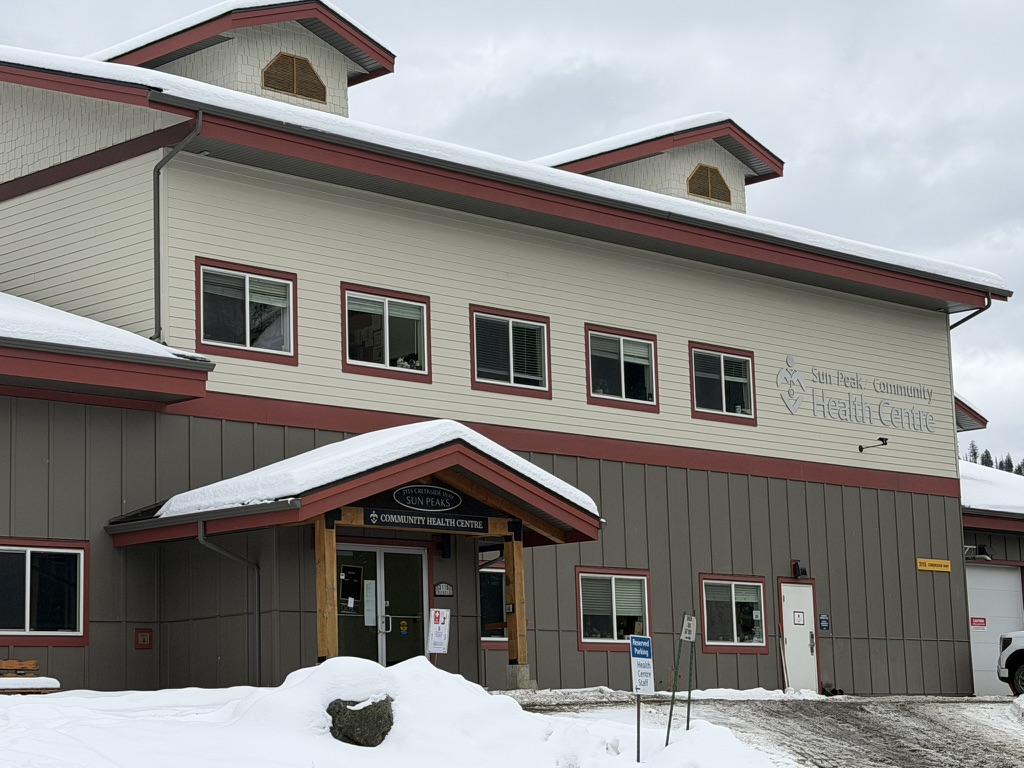
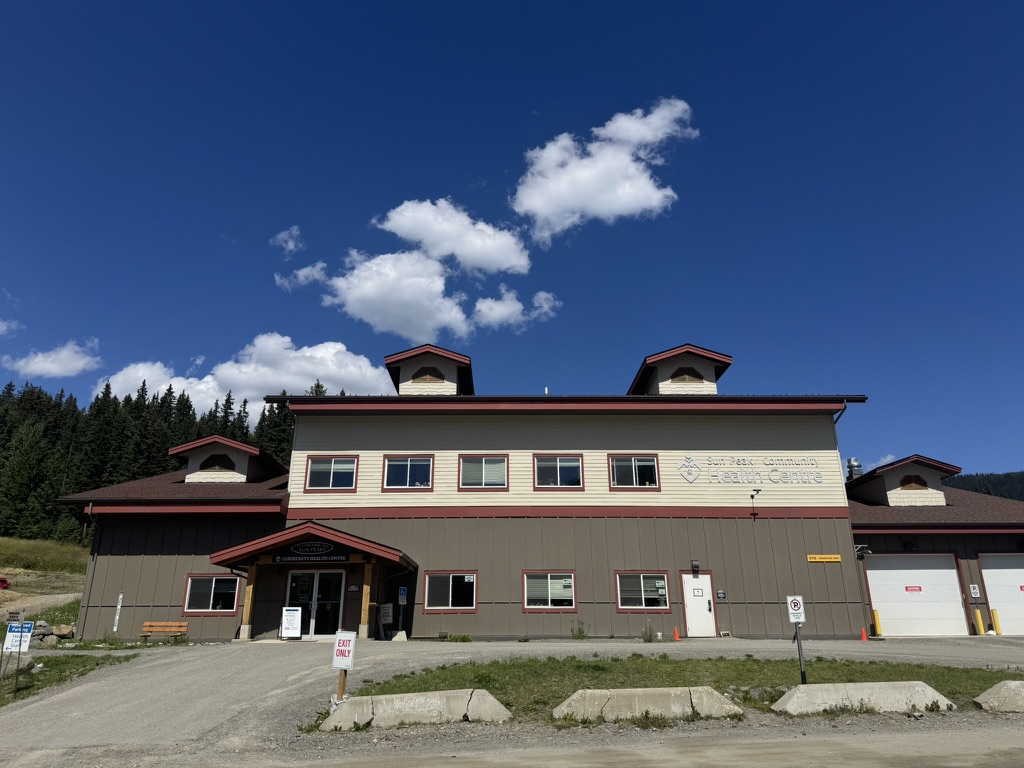
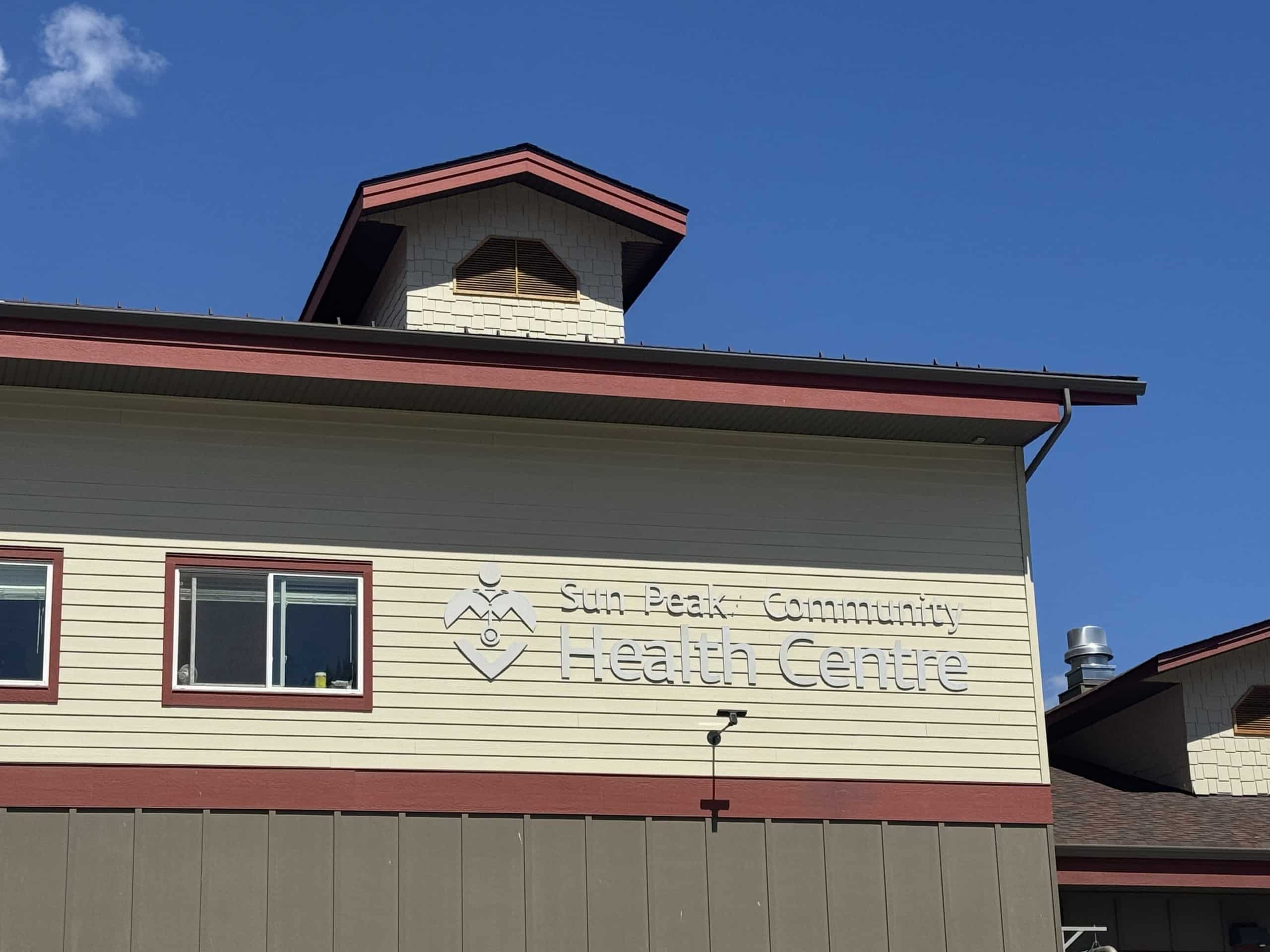
As local residents grapple with the closure of the Sun Peaks Community Health Centre four months into the hiatus, questions abound regarding the timeline, process and procedure around the decision to cease operations at the clinic.
The municipality and Sun Peaks Resort LLP co-own the health clinic building through a stratified structure, with the municipality owning the bottom level and the resort owning the top.
As such, the municipality leases the clinic space to an operator, previously the Kamloops-based Supporting Team Excellence with Patients Society (STEPS).
In July 2025 SPMRM ended its lease with STEPS, putting into motion a months-long transition yet to be resolved.
Prior to STEPS’ official departure from the community in October, SPMRM council established a working group to determine the future operational and financial structure of the centre.

This group also provided recommendations for the request for proposals (RFP), which saw one response after it closed on Sept. 30, 2025.
“We felt [the proposal] did align with many of the working group’s recommendations and with the broader vision for healthcare in Sun Peaks,” Coun. Brian Gillespie told SPIN.
Despite a handful of brief statements during council meetings, through the municipality’s website and in interviews with Sun Peaks Independent News over the last few months, SPMRM has established a tight-lipped stance on releasing information regarding specific discussions and negotiations, citing confidentiality and privacy reasons.
However, in October 2025, the municipality shared the working group’s report offering a peek into the process, hopes for the future and the challenges of the transition.
What was the working group?
The Sun Peaks Health Centre Working Group was a temporary advisory body, which convened six times between July 28 and Aug. 14, 2025.
The group consisted of eight members with expertise spanning local governance, healthcare administration and community engagement. The chairman was Steve Fache and members included Coun. Kelly Dye, Gillespie, Alice Muirhead, Mario Pozza, Brian Montgomery, Darcy Alexander and Serenity Currie.
“The working group was a necessary and valuable step,” Gillespie said. “Members put in a significant amount of personal time, and the guest speakers helped bring clarity to what is a very complex and changing healthcare environment.”
The group was tasked with defining an operational model, including outlining which models ensure long-term financial stability. Other tasks included asset management, service scope and RFP preparation.
During this process, the group analyzed local and provincial health structures and consulted with experts and leaders from similar resort communities, including representatives from the Whistler 360 Health Clinic and Pemberton Family Practice Clinic.
Regarding future operations, Gillespie said he sees a “strong alignment with the working group’s intent.”
“The goal has always been to stabilize family practice first and build from there,” he added. “The municipality doesn’t provide healthcare services directly, but our role is to help create the conditions for a viable, sustainable operator to deliver care.”
The group concluded its work by submitting a final report with recommendations to the mayor and council in August 2025. The report was shared publicly Oct. 21.
What roadblocks to reestablishing a health centre were identified by the working group?
The most significant barrier identified was the challenge of achieving financial stability with a small population.
The working group analyzed successful clinics in resort municipalities like Whistler and Pemberton, noting both rely on “economies of scale,” to be profitable. This term is used to describe the ability to split the high fixed costs of running a clinic, such as paying support staff, rent and purchasing software, among revenue-generation through doctors.
The group learned from the Whistler 360 Health Clinic a clinic typically needs between nine and 11 practitioners to be financially self-sufficient. However, Sun Peaks is a small municipality with only one or two doctors who still need staff, making the cost per doctor much higher.
This lack of economies of scale was a primary reason for rejecting the community health centre operational model for the immediate future. In the past, the group noted the Sun Peaks Community Health Centre suffered financial struggles, running a deficit of approximately $100,000 to $175,000 per year.
While funding from the government through the Ministry of Health’s Longitudinal Family Physician Payment Mode and Nurse Practitioner payment plan, an alternative to the traditional fee-for-service model, could help alleviate this pressure, the report stated it also makes the clinic more reliant on a funding stream that may change in the future.
Other roadblocks identified included personnel and recruitment difficulties.
It was noted that Dr. Signy Frank, who was a physician at the clinic while it was operated by STEPS, expressed dissatisfaction at not being consulted on clinic planning and reported a “strained relationship” with Dr. Catherine Noweirski.
The group noted there was a risk of Frank relocating, which did happen in September 2025 after over seven years practicing in Sun Peaks.
“Although this transition was not part of my original plan, many circumstances have led me to make this very difficult decision to relocate my practice,” she shared in a statement. “After much reflection, I believe that relocating will allow me to continue to provide the highest quality of care for my patients.”
Housing costs and payment models were also cited as the main issues impacting doctor recruitment.
The potential timeline constraints were also noted as a reason for eliminating the community health model, citing its complexities factoring into the tight window of finding a working solution quickly.
Speaking to timeline challenges currently impacting the process, Gillespie said while council and staff have put in “a substantial amount of time and effort,” two parties are involved in negotiations, meaning it’s not solely within the municipality’s power to finalize the decision.
“Some timing is outside the municipality’s control,” he added. “Both sides are committed to reopening the health centre as soon as possible.”
To sell or lease the Sun Peaks Community Health Centre to a new operator?
The working group recommended leasing the clinic space to the incoming operator, advising to maintain “public ownership and community oversight of a vital community asset.”
“Given how important healthcare is to the community — and the pressure to find a real path forward — council chose to explore whether a sale could be structured in a way that still protects the space as a health clinic,” Gillespie told SPIN.
As the proponent operator and sole respondent to the RFP, Noweirski expressed interest in purchasing the clinic portion of the building, valued between $750,000 and $1,000,000 according to the repot. However, the risk of private ownership included “potential loss of community influence and long-term stability.”
The only scenario in which the working group supported selling the building, according to the report, was if it were purchased by Interior Health, as this would secure it within the provincial system. However, through the post-RFP negotiations, council has explored the possibility of a sale.
“After significant public outcry, council has been actively working on the possibility of a sale of the space as that is what the proponent wished,” Dye, another councillor who contributed to the report clarified. “There are many factors making the sale a very complicated process, including but not limited to following the Local Government Act.”
The working group found Coastal Health owns the main clinic buildings of Whistler and Pemberton and charges clinics significantly less than market value for use. This was noted as a viable option for Sun Peaks.
According to the report, leasing the building rather than selling also provides the municipality with flexibility to revisit terms “as operational needs or community conditions change.”
The cons of this recommendation were also identified, including that retaining ownership may limit long-term investment in facility upgrades by operators as well as administrative burden on the municipality to manage lease and property issues.
What healthcare model was recommended for the Sun Peaks Community Health Centre?
While several healthcare models were evaluated, the working group recommended the family practice clinic model as the most effective operational structure for the community, as opposed to walk-in clinic or urgent care centre models.
The most significant clinical difference between these models involves the relationship between the patient and doctor, with the family practice clinic model focusing on longitudinal or continual care. Walk-in clinics are primarily episodic, and provide access to non-urgent medical care.
Similar to walk-in clinics, the urgent and primary care centre model focuses on same-day, non-emergency issues for unattached patients. Both urgent care and walk-in clinics may offer extended hours, but fail to provide relational continuity compared to family practices. The working group deemed these unsuitable for smaller communities, “given required population base to support viable operation.”
The family practice clinic mode was chosen in part to allow for rapid implementation “for a smooth transition in a limited timeframe, meeting the urgent needs of the community,” according to the report.
Additionally, the group stated the model as familiar to practitioners and patients, which would help support recruitment and retention of healthcare professionals.
“We are trying to accomplish the model that was the number one recommendation of the group which is a private practice run by a physician, with the municipality being able to greatly support an operator with a basically $0 lease to get the clinic up and running,” Dye said.
The group viewed this as a practical starting point that utilizes existing funding mechanisms like the Longitudinal Family Physician Payment Model, while offering flexibility.
“While a non-profit health centre may ultimately prove ideal for Sun Peaks as the population and complexity of needs grow, the consensus was that [the] family practice clinic model offers a practical, effective and timely solution within the current transition window of approximately two months,” the report read. “Particularly of note is the question of financial viability of a non-profit health centre in a smaller community such as Sun Peaks.”
While this model was ultimately recommended over the others, the group did identify drawbacks.
The family practice clinic model may initially lack the extensive community governance and wrap-round services seen in the community health centre model, the report stated.
This model was also stated as being “less robust in providing interdisciplinary care at the outset, potentially limiting services for complex cases.”
Because the family practice clinic model was recommended in part for its flexibility in transitioning to a community health centre model, it was also noted that doing so might require organizational restructuring and additional investment.
What did the working group recommend for scope of care at the Sun Peaks Community Health Centre?
The working group recommended a hybrid approach to care, prioritizing local patients while providing walk-in services for visiting guests.
Starting at a minimum of five days a week, with walk-in and urgent care seven days a week, the group identified the long-term goal would be to expand to include more doctors or nurse practitioners who could potentially provide care across the spectrum including physiotherapy, mental health supports and allied health services.
This scope of care would prioritize Sun Peaks permanent residents “ensuring continuity of care for the local population.”
“Striking a balance between serving permanent residents and the transient tourist population will require ongoing evaluation and adjustment,” according to the report.
While these service needs were outlined in both the RFP and working group report, chief administrative officer Deanna Campbell told SPIN in practice, it will be at the operator’s discretion to meet these needs.
“To ensure the viability and sustainability of the operations in the health centre for the community, ultimately it would be up to the operator to determine scope of services, hours of operation, how they intend to fund their operation and services,” she said.
As stated, recruitment and retention of healthcare professionals has been a challenge, and the report stated initial staffing and scheduling as a potential con of this recommendation. Basing expansion on additional doctors may also constrain the clinic’s ability to grow and provide more services.
Looking ahead
Both Gillespie and Dye reiterated that while council may explore options outside of the working group’s recommendations, the work done through the process was a vital and necessary step to outlining a feasible plan for the future health centre.
“The working group was of great usefulness as I was unaware of the many complexities of operating health care in B.C. and the many models available,” Dye said.
Council continues to work to remove roadblocks to reopening the clinic, he added.
“Obviously we are all disappointed that the process has taken this long, we all wish the clinic to be open as soon as possible,” Dye said. “It is important to remember that the goal is to have a long term stable health centre in Sun Peaks and it’s better to have it take longer and get it correct than to rush into a situation that will not last.”
Campbell emphasized the municipality’s urge to share more information.
“The municipality recognizes that the community feels there has been a lack of communication and information and a lack of progress,” she said. “We are mindful of confidentiality and respecting the negotiation process with the proponents, but we understand frustration and concerns in the community and lack of updates on progress.”
The municipality is working to share more information this month, she added.
What did you think of this story?
Sun Peaks Independent News is your essential source for community news in Sun Peaks. Your feedback after we publish a story helps ensure we're always improving our reporting to better serve you.