
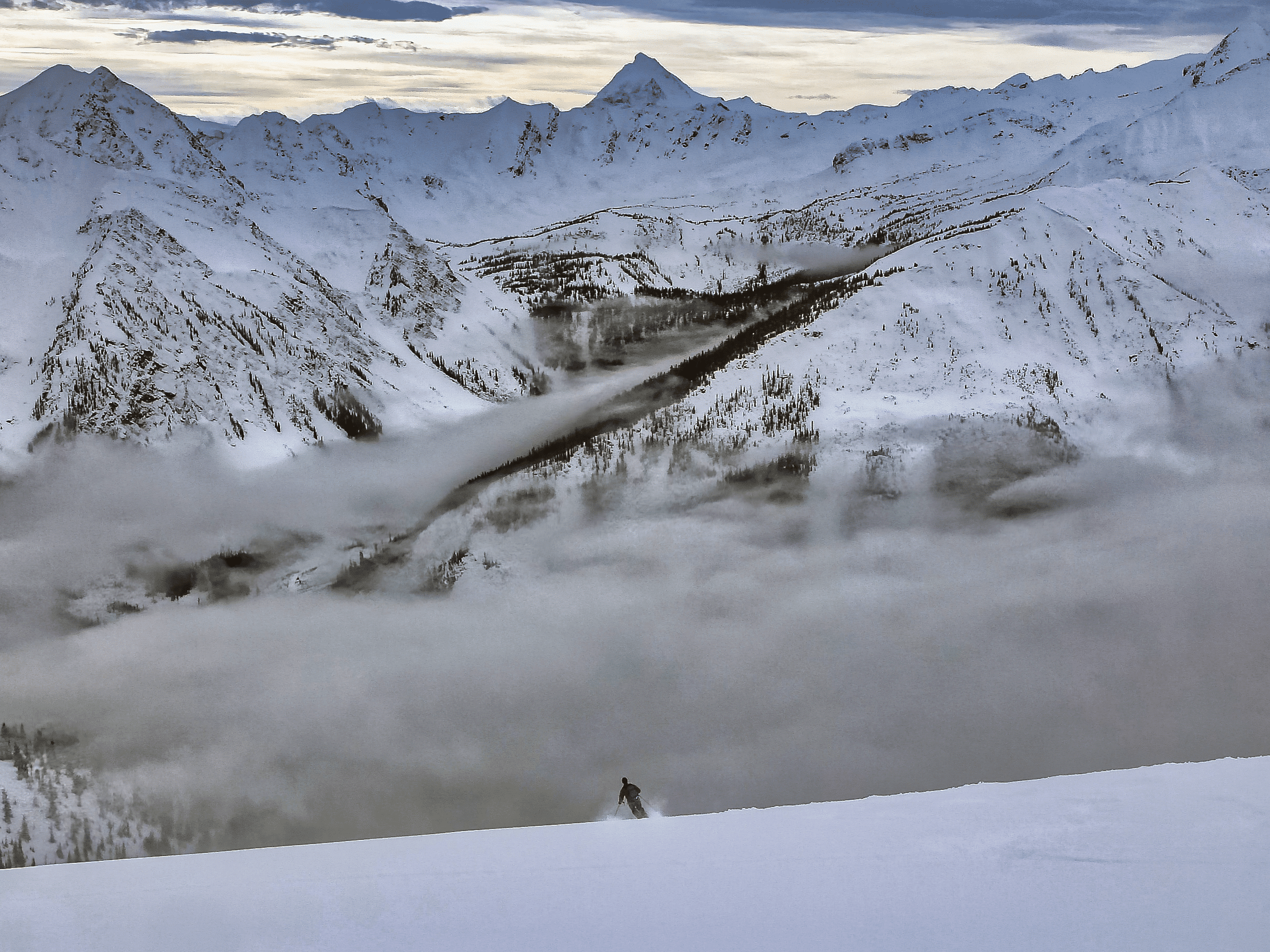
The Interior of British Columbia has enjoyed excellent backcountry ski conditions so far this winter, particularly in November with some of the best early-season conditions in recent memory. After a number of dodgy winters, with either a low snowpack or tricky avalanche conditions, this season feels like a bit of a reset. As of mid-December, the BC River Forecast Centre reported the provincial snow depth at 102 per cent of the average—a promising start to winter. The one caveat is the low-elevation snowpack has been sparse. This winter is about heading to higher elevations.
November’s steady storms helped establish a solid snowpack with few weak layers or crusts. By mid-December, treeline elevations held healthy snow depths and we regularly found a 100 to 150 centimetre snowpack in the North Thompson. These conditions set the stage for excellent winter recreation.
The snowfall slowed down around late December, and we are currently experiencing a bit of a dry spell. As we expected, the nearly perfect snowpack setup that we experienced in November and into early December is starting to show a few blemishes. With warm temperatures and sunny skies, we have been finding a zipper sun crust in some locations. We are also finding some upside-down powder, which is definitely not what we wanted or were experiencing early in the year.
Southern B.C. and Western Alberta received a significant amount of fresh snow in mid-December and early January. These storms may impact the avalanche danger as new snow and wind form reactive slabs. Sticking to conservative terrain during active storm periods and avoiding steep slopes with significant consequences is best. Be sure to be prudent when you start venturing out into more challenging terrain. Always check out Avalanche Canada Public Avalanche Bulletin and adapt your plans accordingly. One thing to consider is how long any weak layers found in December will persist. While not widespread, these layers can be location-specific and very reactive.
Looking at the big picture, B.C.’s snowpack is near normal for this time of year, with some regional variation. By Jan. 1, the BC Automated Snow Weather Station network recorded the provincial average snowpack at 101 per cent of the long-term median. Typically, around 45 per cent of the total seasonal snowpack has accumulated by this point in the winter.

Some regions, like the Central Coast, Northwest and Nechako, are seeing below-average snowpacks. Meanwhile, areas like the Liard and Boundary are above average. The North and South Thompson regions are around 100 per cent of normal, which is much better than last year. These differences highlight the importance of understanding local conditions and tailoring plans accordingly. If you are planning an unguided, multi-day trip to a backcountry lodge somewhere, review the BLBCA’s Self-Guided Recommendations document. It’s a common-sense approach to safety practices that may help with decision-making when travelling in the backcountry.
While the season is relatively young, this winter’s snowpack is shaping up to be refreshingly stable and predictable compared to recent years. With solid coverage, we are eager to keep heading out and enjoying B.C.’s inimitable backcountry.
As always, make sure you get out, ride safely and recreate responsibly.
What did you think of this story?
Sun Peaks Independent News is your essential source for community news in Sun Peaks. Your feedback after we publish a story helps ensure we're always improving our reporting to better serve you.