
The Clearwater River Road is a main artery for recreationalists and tourism operators who specialize in hiking, rafting, kayaking, mountain biking, and sightseeing. Since the road was washed out in July, user groups have been unable to access some of the most pristine and beautiful areas of Wells Gray Provincial park and the future of the road was uncertain. Now, two logging companies are banding together to make sure something gets done.
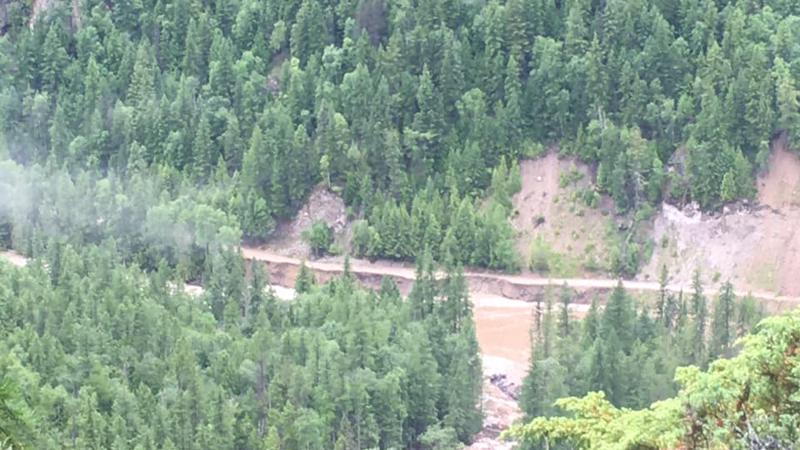
In June, the Clearwater River Road, an unpaved road which flanks the west side of the Clearwater River was washed out due to record high water levels. Since then, two local logging companies have stepped in to help speed up the process of rebuilding one of Wells Gray Provincial Parks’ main corridors to recreation and tourism.
When Hans Wadlegger of Wadlegger Logging & Construction Ltd. heard about the road being washed out, he couldn’t help but begin to think about the impacts it would have on the District of Clearwater considering recreation and tourism are large parts of the local economy.
The road is within the Wells Gray Provincial Park boundary. This means the provincial government is responsible for repairs paid for from the BC Parks budget, which is already critically underfunded according to a Canadian Parks and Wilderness Society report from earlier this summer.
Furthermore, it would likely take years to complete the project if undertaken strictly by government processes. First, they would have to hire a consulting firm which could take up to 60 days, according to Wadlegger, draw up plans for the road, get them approved, and consult with local Indigneous groups.
With all of this in mind, Wadlegger said he knew something needed to be done as soon as possible, and called Dale Miller who runs another logging operation in the area, Dale Miller Logging.

“Dale is a good family friend and up to do anything for the community as well. So we said well, why don’t we go fix it?”
Wadlegger proceeded to contact other community members, some of whom are retirees, and want to lend a helping hand in whatever way they can.
“Some guys, you know, did do forestry layouts, some guys have worked with the department of fisheries and oceans and then (some have done) First Nations consultation. Those types of (people), you know professionals, some of them retired, some of them not, and so I sent this email out and everybody (responded) Yep, we’re in.”
Wadlegger added there are large corporations offering their services as well, some of whom are based in Kamloops.
“The job will be totally volunteer. It’s on everybody’s dime that will be working on it,” he said.
The road has no value to the logging industry anymore, so the project that Wadlegger and Miller are funding will be strictly for the community.
“We just want to see our tourism sector and the rafters specifically able to earn a living. It’s one thing when you can’t go to work when it’s stuff that is totally out of their hands and they just don’t have the means to manage something like this and that’s where the community comes in,” Wadlegger said.
Doug Trotter, who owns and operates Interior Whitewater Expeditions (IWE), a rafting company that has been operating for more than 30 years on the Clearwater River, was unable to open for the first time this season because of the road washout coupled with challenges related to the COVID-19 pandemic.
While there are no shovels in the ground due to ongoing geotechnical planning and Indigenous band consultation, Trotter said if the project can get underway this fall, it will be a miracle.
Trotter, and other whitewater rafting and kayaking operators in the community, rely on the road to shuttle customers up and down the river. Access to the best rafting spots is limited if travelling on the Clearwater Valley Road on the other side of the river. 
One of the current issues being faced is that the provincial government is proposing an alternate access road, which Trotter says will not be sustainable for the tourism industry in Clearwater.
“(The alternate access) would come down on the other side with a road either at the second canyon or third canyon just upstream from where we put in. That’s all fine and dandy, but it really doesn’t solve the issue of how we’re ever going to see Sylvia Goodwin falls again, how we’re ever going to see and enjoy the beach at kilometre 28, how we’re ever going to raft our one day, our two day, our five day trip, you know, and run through Sabretooth Canyon again…We’ll never do any of that stuff ever again unless the road gets fixed (and) all those iconic landmarks will be gone forever.”
Additionally, Trotter said alternate access would impact the future of the local economy.
“What’s good for the District of Clearwater is having rafting companies that can take quite a few people down everyday to fill up their B&B’s, and gift stores, and hotels, motels, and everything”.
What did you think of this story?
Your feedback after we publish a story helps ensure we're always improving our reporting to better serve you.