

If you’re heading out for skitouring and splitboarding this season, it’s essential to manage risks now that powder has finally graced Interior B.C.
Touring in Sun Peaks’ slackcountry – areas outside a controlled recreation area (CRA) – is popular for many locals. Excitement over better conditions with this year’s El Niño and low snowpack can lead to lower risk tolerance. Provincial data as of Jan. 1 shows the snowpack is 60 per cent of its normal level in the North Thompson, as persistent drought conditions continued into the fall.
The snowpack around Sun Peaks has potential areas of weakness because of how shallow it is, according to Brad Harrison from Colwest Alpine Adventures. He encouraged people to prepare as much as possible when heading outside the CRA should an avalanche trigger.
An instructor for Avalanche Skills Training (AST) courses in the Thompson region, Harrison worked in the adventure guide program at Thompson Rivers University and is an avalanche forecaster for Sun Peaks.
“Your normal degree of savvy or your acceptance of risk – you really shouldn’t let that change just because Mother Nature hasn’t provided you with the conditions you want,” Harrison said.

Practising avalanche safety skills to the point that your reactions are on autopilot will help you when the time comes, according to Harrison.
“An avalanche is a stressful situation, just like any accident,” he explained. “Your cognitive function tends to decrease. Practise with your friends, have a couple of extra beacons, bury them for some lunch money. You can see who has been practising and who has not.”
Trust your gut

Madison Adams goes out touring on Tuesdays with a group of friends in Sun Peaks’ slackcountry. She has lived in Sun Peaks since 2011 and is as passionate about snow science as anyone can be. Enrolled in the adventure guide program at Thompson Rivers University, Adams studies snow conditions and practises her skills with friends each week.
“I’ve been pretty nervous about the snowpack just because we don’t have a whole lot of it – shallow snowpacks slide to the ground really easily,” she said, meaning anyone caught in an avalanche could be pushed into the ground rather than snow because of how little snow there is.
Conditions in the area are temperamental enough that a size one avalanche was triggered inbounds at SPR in Crystal Bowl. The slide happened at 10 a.m. on Jan. 9, a rare occurrence within the resort. A size one avalanche isn’t large enough to harm a person unless it pushed them into more hazardous terrain, but the operations team at SPR cleared guests from Burfield and Crystal and closed the chairs as a precaution. After a thorough inspection of the area by the Mountain Safety team, the terrain re-opened about an hour after the slide, according to Aaron Macdonald, director of marketing for SPR.
Before heading out, Adams checks the weather a few days in advance and looks at the avalanche rating, as the forecast leading up to touring impacts the snowpack. She tries to head out early in the morning for less temperature variance, which would increase avalanche risk. If all looks good, she meets her friends in the parking lot for a gear check-up – testing beacons, food, water, clothing and tools to fix bindings or skins.
When touring, she doesn’t listen to music so she can hear any ‘whumpf’ sounds that indicate snow collapsing, which may cause avalanches. She observes the snow under her skis and her surroundings closely. Then, before anyone starts skiing or riding, they dig a test pit and do a compression test on the layers, checking the firmness and density.
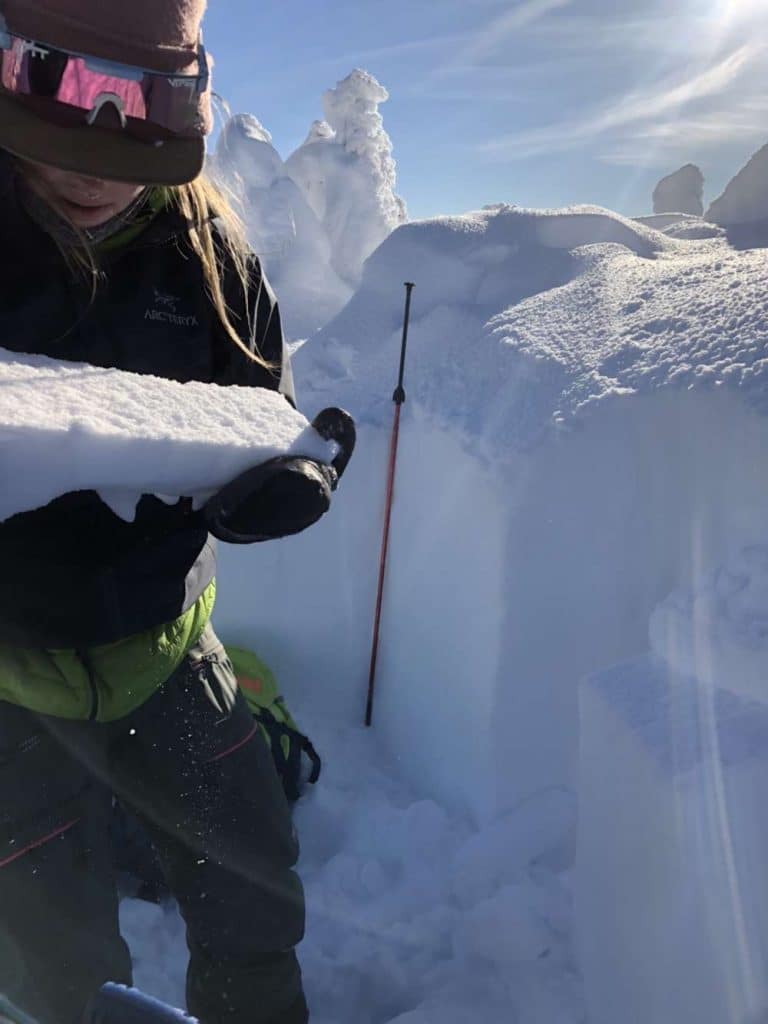
“If everything is good, we go,” Adams said. “If it’s not, we stick to simple terrain.”
Anyone in the group can call off the mission if they don’t feel right, according to Adams, who believes trusting one’s gut is critical in the backcountry and slackcounty.
“Intuition is pattern-based learning, and if you feel something is off, something’s probably off,” she said, citing case studies from her program where someone felt conditions weren’t right and ignored them to their peril.
While touring Jan. 9, the test pit she and her friends dug collapsed with three taps on the shovel. The poor result wasn’t surprising to Adams, as she frequently contacts locals who test avalanche conditions.
Areas inside the resort and further out in the backcountry are also key to consider, according to Harrison and Adams.
Prepare for the worst
When skiing in an uncontrolled area your best luck is your group.
Going out with people with similar risk tolerances and skills, and basic rescue equipment is imperative, (including a beacon, shovel and probe), because your group will be the first responders on the scene should something go wrong.
People aren’t as informed as they could be even while in resort, Adams said, noting that places like Gil’s can slide. Having a partner and staying informed while skiing or riding anywhere is one of the best ways to ensure safety, she said.
Harrison also often sees people head out touring Mt. Tod with packs far too small for emergencies. When touring in December, it’s dark for almost 16 hours daily. It can take time for search and rescue to find injured adventurers, and having enough food, water and warm clothes can mean the difference between life and a serious situation.
Knowing your gear well also ensures you can act quickly when necessary. Still, the biggest benefit is time spent outdoors learning from others and mistakes made along the way, according to Harrison.
“Join clubs with experienced people in them and ask them many questions,” Harrison said. “There are lots of citizen scientists out there.”
He recommends reviewing free courses on Avalanche Canada that provide much of the information necessary for backcountry touring and taking an AST course from one of the many providers in the region.
According to B.C.’s coroner’s report, from 2011 to 2022, B.C. had an average of seven avalanche deaths yearly. In 2023, Avalanche Canada reported 16 people died in Alta. and B.C. from avalanches triggered by various snow sports.
Deaths are sadly part of Adam’s career choice, and that means respecting Mother Nature is paramount.
“The mountains will put you in the ground,” Adams said. “They will humble you quickly – whether it’s an injury or…potentially a fatality. They are ever-changing. They’re beautiful, but you never really know what you’re getting into.”
What did you think of this story?
Your feedback after we publish a story helps ensure we're always improving our reporting to better serve you.